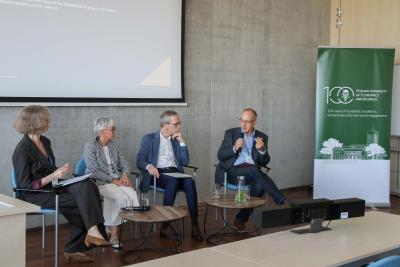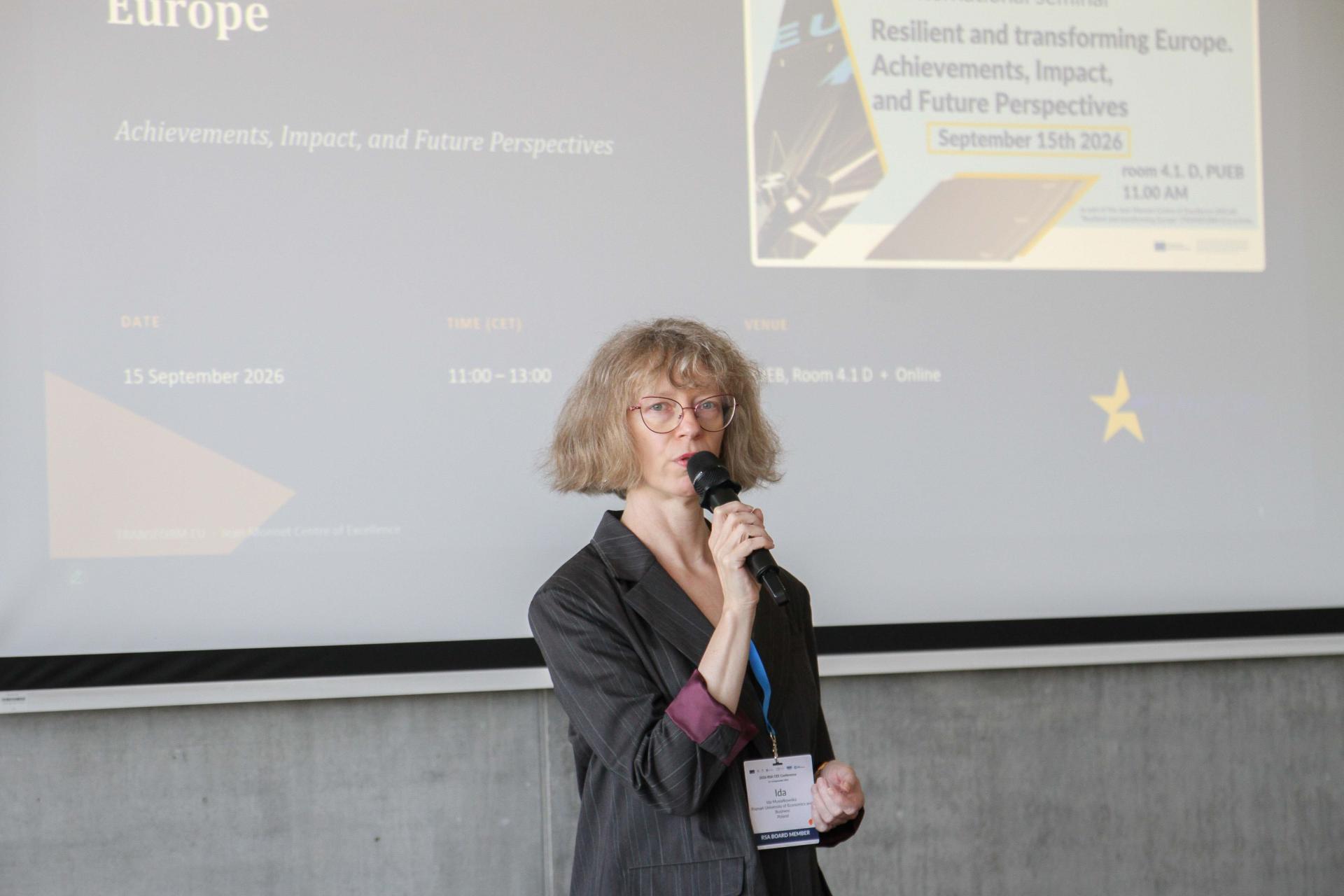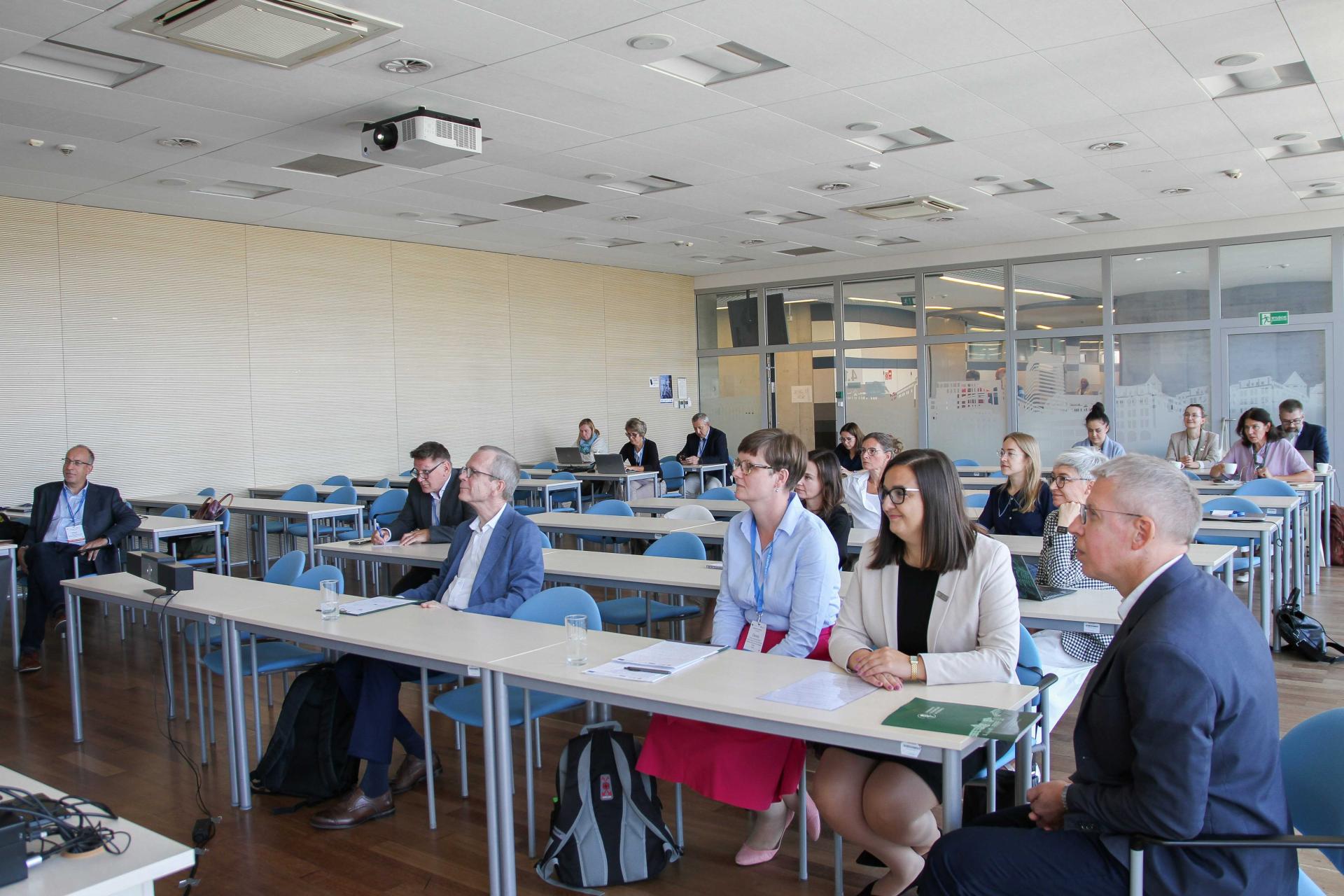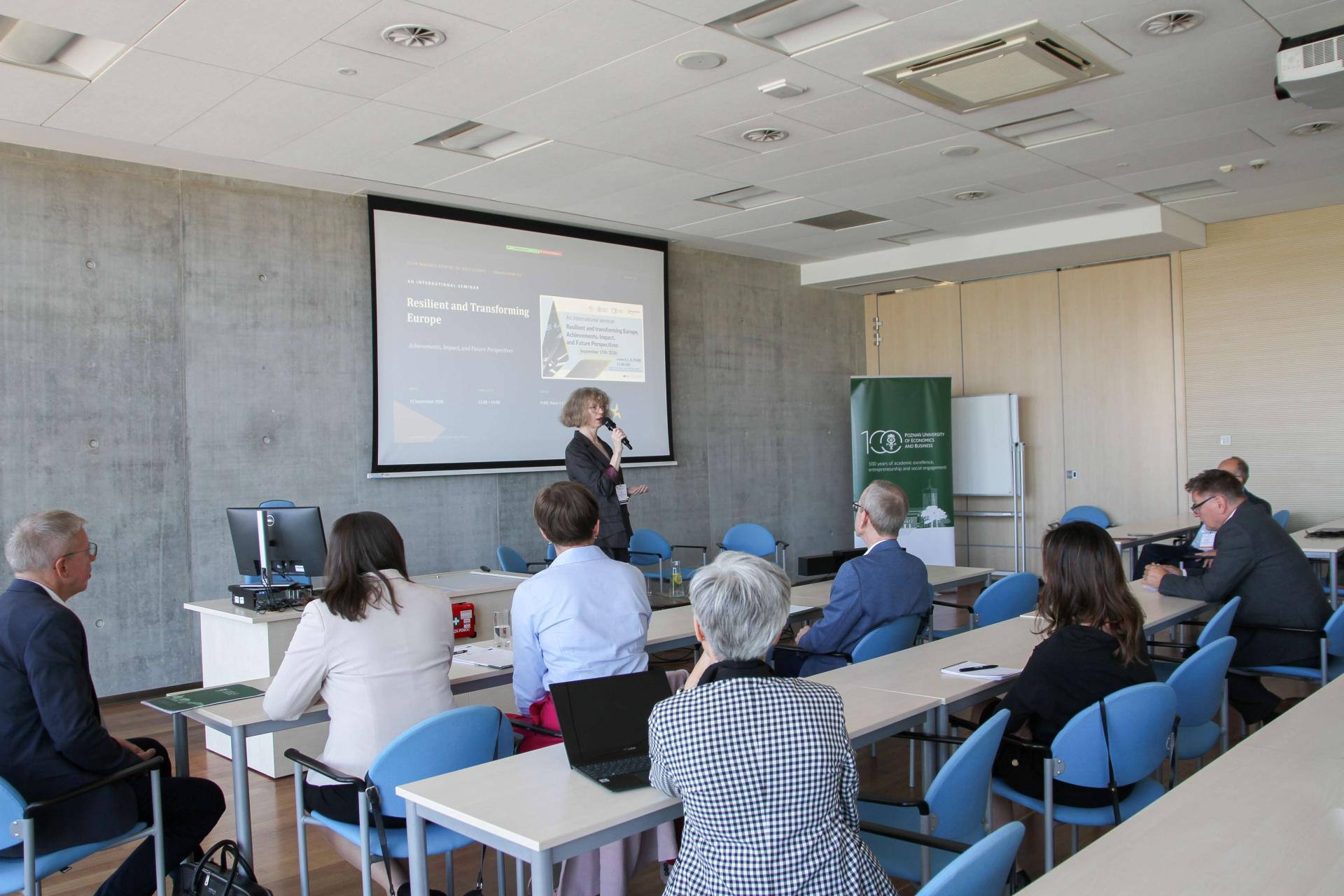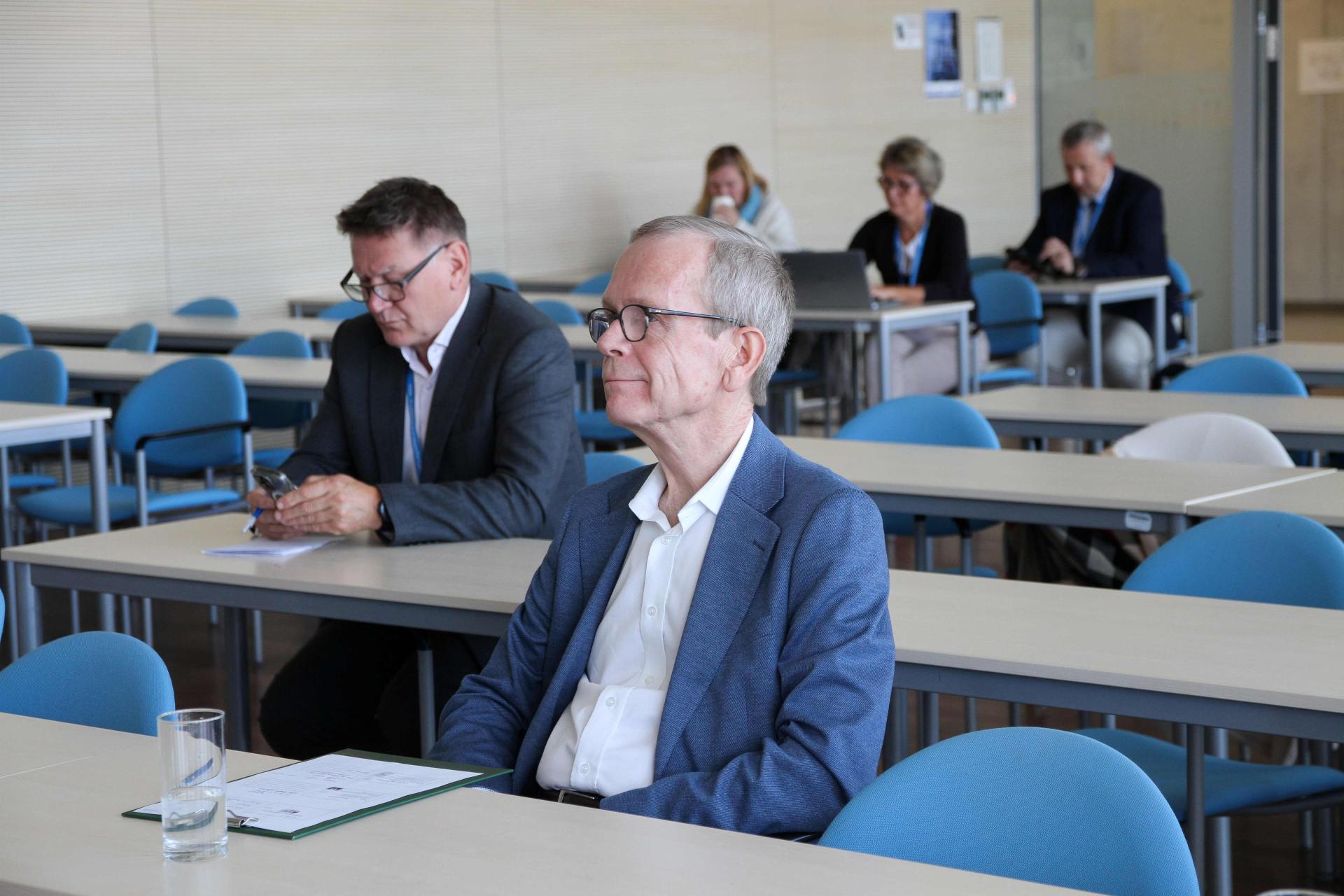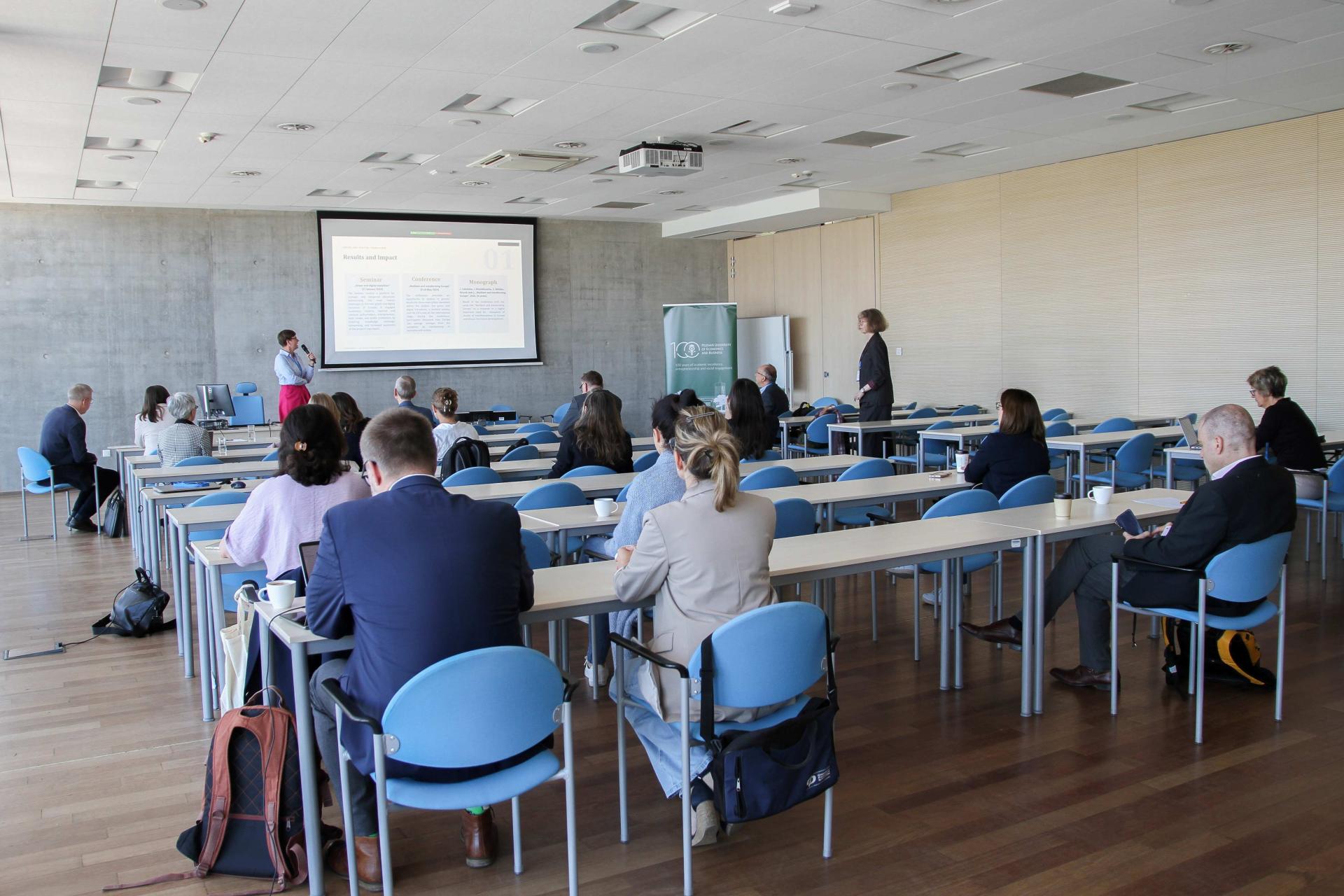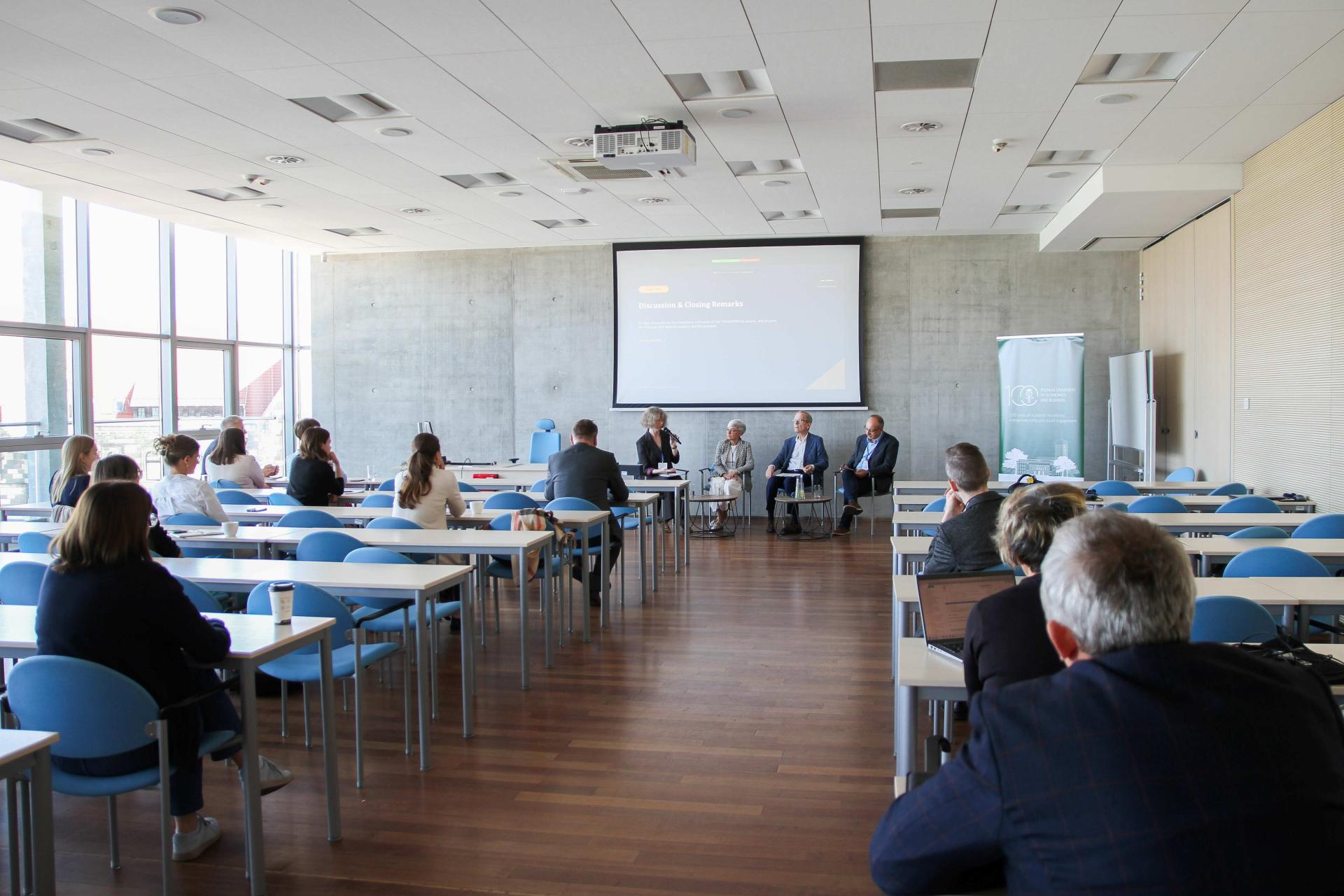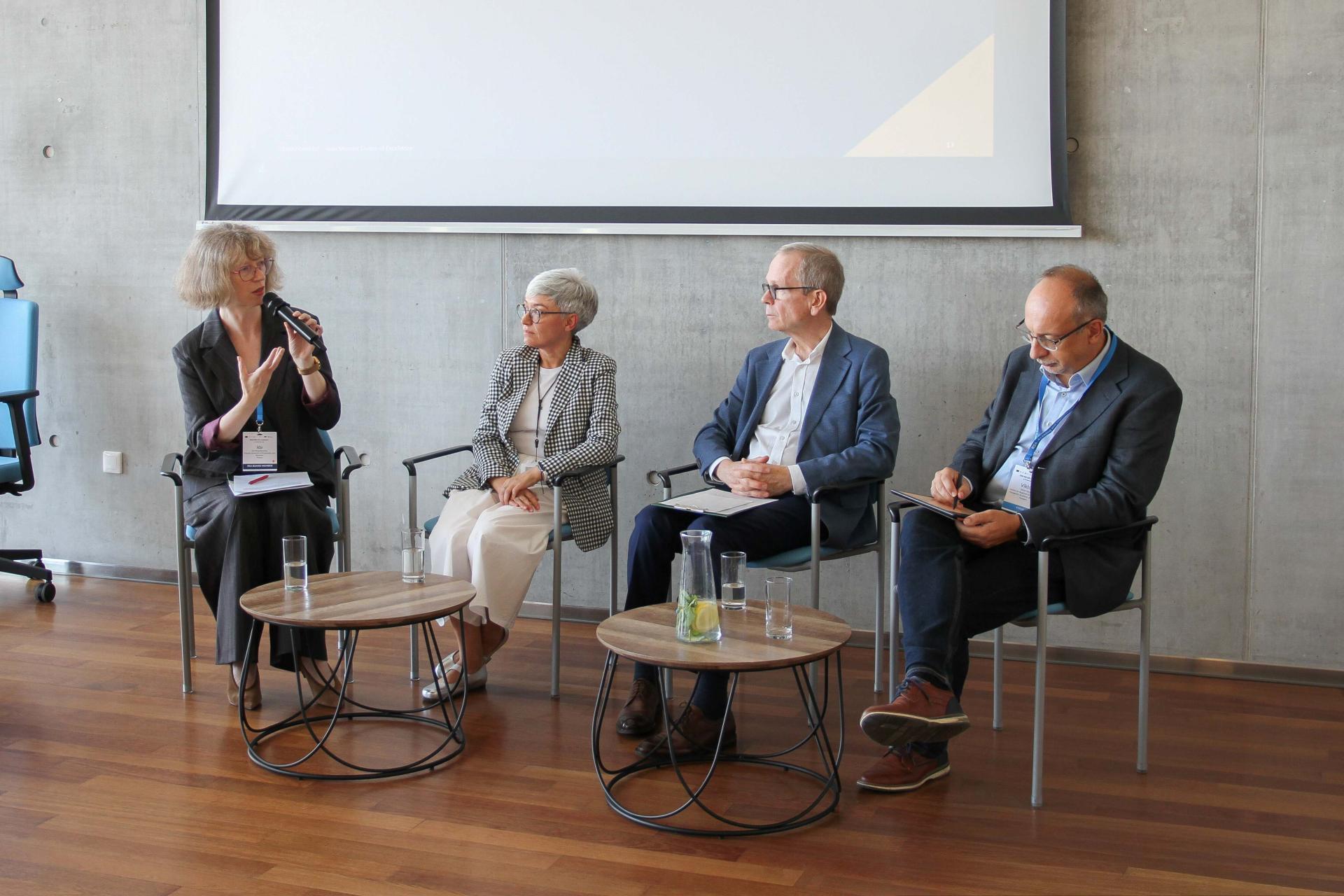
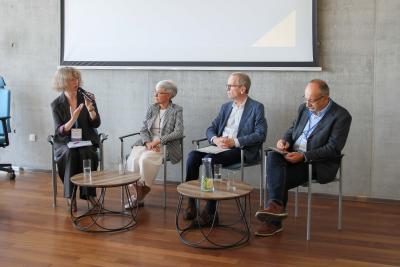
On 15 September 2026, the Poznań University of Economics and Business (PUEB) hosted the international closing seminar titled “Resilient and Transforming Europe. Achievements, Impact, and Future Perspectives”, held in a hybrid format (on-site and online). The event was organised as part of the Jean Monnet Centre of Excellence (JMCoE) “Resilient and transforming Europe” (TRANSFORM EU) activity, co-funded by the European Union.
The meeting served as a platform to summarise the achievements, impact, and key conclusions developed across the project’s three core thematic pillars:
1. Green and Digital Transition
This session was presented by Dorota Czyżewska-Misztal (JMCoE Team Member, PUEB), followed by a keynote speech delivered by Viktor Varju. The presentation summarised previous initiatives in this area, including the seminar held on 17 January 2024, the international conference in May 2024, the teaching guide “How to talk about sustainable development?”, workshops for teaching staff, as well as research papers and a forthcoming monograph. Key takeaways highlighted during the session included:
the crucial role of EU cohesion policy in facilitating the transformation of European regions towards sustainability;
the need to re-examine the role of universities in a world increasingly dominated by artificial intelligence;
the importance of developing and implementing standardised indicators to measure both the positive and negative impacts of digital technologies on sustainable development;
the significance of concerted efforts among all stakeholders and retaining lessons learned from recurring crises.
2. Resilient Society
The second part was presented by Piotr Idczak (JMCoE Team Member, PUEB), with a keynote speech given by Maciej Żukowski. The session reviewed the outcomes of the expert seminar (which resulted in a report authored by three experts), European lessons for youth (attended by 242 students), and a meeting for foreign students (with 35 participants). The main recommendations from the report focused on three dimensions:
Sustainable consumption (including short food supply chains, extending product lifespans, and the sharing economy) as a foundation for social and economic resilience;
Resilience of health systems, which face structural pressures such as population ageing and a shortage of around 1.2 million health professionals in the EU, requiring investments in prevention, digitalisation, and EU funding instruments;
The role of cities in transformation, emphasising the need to give municipalities—especially small cities and disadvantaged or urban–rural areas—a stronger role in shaping and financing the European Green Deal and post-2027 Cohesion Policy.
3. The Role of the EU in the World
The final panel was introduced by Judyta Cabańska (JMCoE Team Member, PUEB), with a keynote speech delivered by Ewa Mińska-Struzik. The overview covered the seminar held on 21 November 2025, a series of European lectures for seniors, and an open-access report published in both Polish and English. Key conclusions in this pillar pointed to:
the necessity for a more coherent, action-oriented EU external policy amid geopolitical shifts and the ongoing twin green and digital transitions;
the need to diversify partnerships (including a stronger focus on the Indo-Pacific) and reduce strategic dependencies in critical technologies and supply chains;
moving beyond rhetorical multilateralism towards practical strategic autonomy while overcoming internal political fragmentation within the EU.
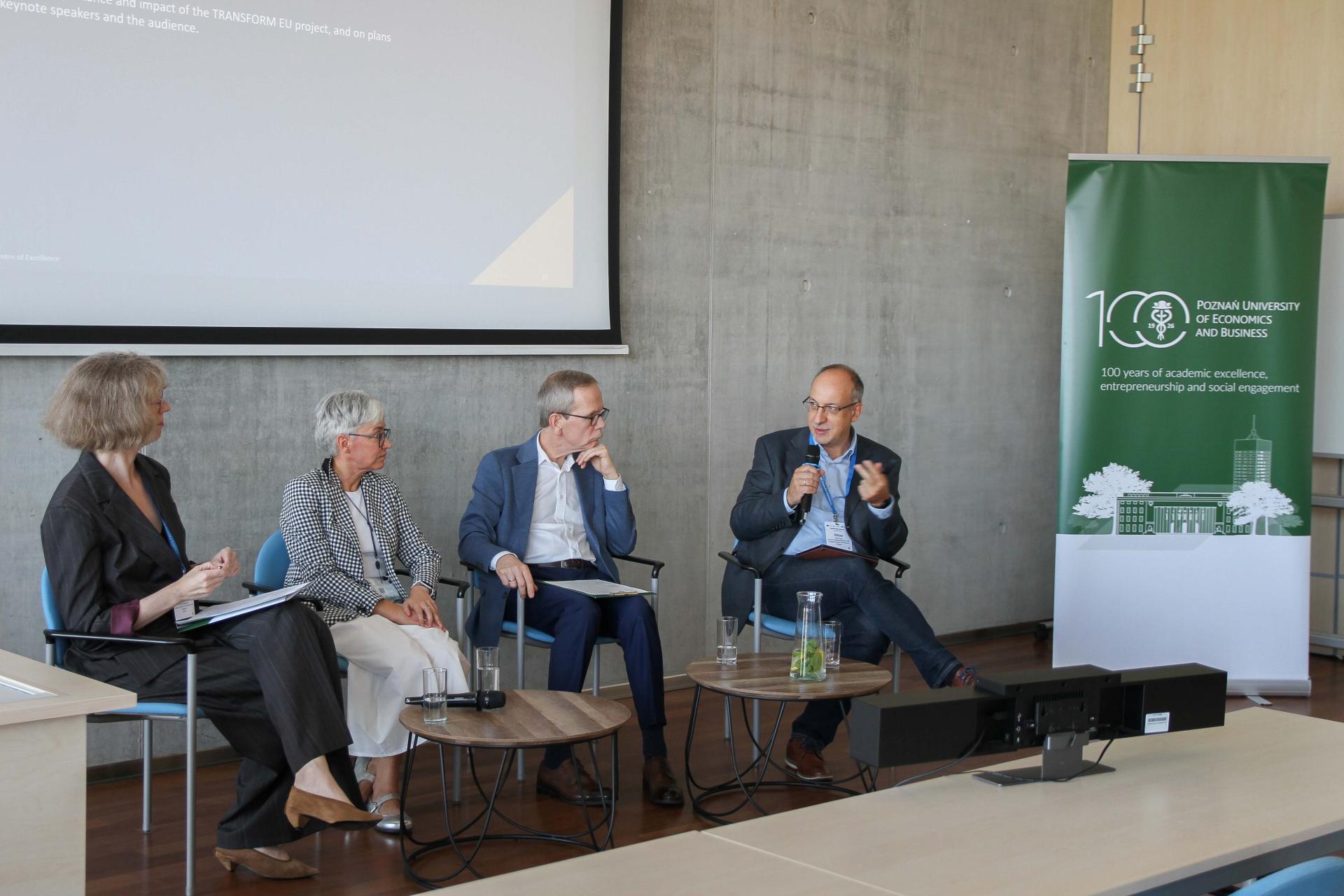
The seminar concluded with an open discussion involving the keynote speakers and the audience on the significance and impact of the TRANSFORM EU project, as well as plans for future cooperation. The project partners were the Centre of Excellence at the Warsaw School of Economics (CEWSE) and the University of Economics in Katowice.
This activity was organised as part of the Jean Monnet Centre of Excellence “Resilient and Transforming Europe” (TRANSFORM EU), co-funded by the European Union. Views and opinions expressed are however those of the author(s) only and do not necessarily reflect those of the European Union or the European Education and Culture Executive Agency (EACEA). Neither the European Union nor EACEA can be held responsible for them.
Galeria zdjęć
- Obraz
- Obraz
- Obraz
- Obraz
- Obraz
- Obraz
- Obraz
- Obraz